Category: Obedience Classes

  • Teach your dog to Stand, Rollover, Crawl, Lay Down and Focus

    Teach your dog to Stand:
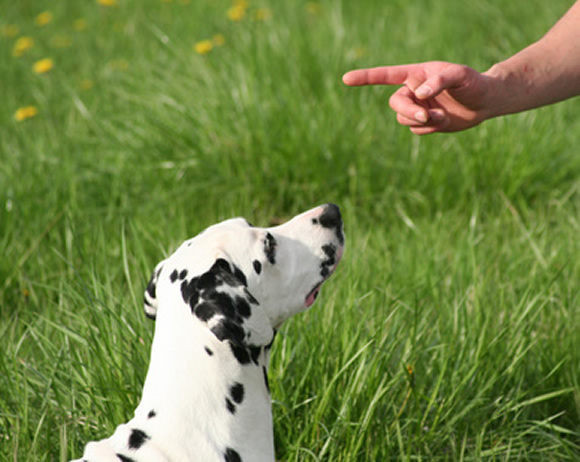
    Starting from the sitting position, hold a treat right in front of the nose of your dog, then say stand. Then move the treat above him so that he will have to stand in order to reach it. As soon as he stands say good boy! Then wait for him to sit back down to give him the treat. While he is standing you can move just a few steps while holding the treat. Praise him a lot if he follows you.

    Teach your dog to Rollover:
    Starting from the laying position, say roll over and then proceed to roll your dog over gently. Do this by grabbing his legs and then pull him, or simply push him from one side so that he makes a complete roll. After he has completed the roll, make him sit, praise him and give him the treat.

    Teach your dog to Crawl:
    Starting from the laying position, say crawl while holding a treat in front of your dog’s nose and move it a few inches away from him. If he begins to stand up, just say no crawl, start from the beginning and have him lay back down again. Praise him a lot and give him the treat as soon as he crawls, even if it’s only a few inches.

    Teach your dog to Lay Down:
    There are various ways to do this. Begin with having your dog sit then say, lay. Then present the treat in front of his mouth, going all the way down to the ground with your hand. The dog will naturally follow your hand and will end up lying down. Give him the treat only when he stretches his forearms in front of him and then praise.

    Teach your dog to Focus:
    Begin by sitting or kneeling, in front of your dog. Hide your hands so he won’t be distracted looking at them and then say your dog’s name followed by saying focus. As soon as he looks at you in the eyes start praising him. Always keep eye contact and after a few seconds give him a treat. If he looks elsewhere, just call him again and begin to start over. Try to extend the time while he’s focused on you.

  • Helpful Drills for Dog Agility Training

    Learning to handle your dog properly is a major role in dog agility training. This means communicating what you want your dog to do. Once your dog has the basics down, most errors that occur are due to the handler’s abilities. As a handler, you need to learn how to communicate what you want your dog to do or perform. One way to do that is to practice exercises that teach you how to better handle your dog.

    Every dog has his own way of running the course. Some dogs need little guidance while others need the handler by their side at all times. By watching your dog and how much he relies on you to complete the course, you’ll be able to determine how much handling your dog needs.

    To properly access the situation, try setting up two basic hurdles side by side and direct your dog to the right hurdle. Study your dog’s reaction as you send him to the hurdle. Does your dog leave your side or does your dog expect you to run or walk with him the entire way?

    Then try making the course into an “S” shape where you’ll be starting on the inside line and crossing over in the middle so that you will stay on the inside line. Try first with a fast obstacle such as a hurdle, tunnel or series of hurdles in the center of the course. Send your dog over the hurdles and cross behind your dog so that you switch effortlessly.

    Next, put a slow obstacle in the center of the course such as weave poles, a table or contact obstacle. Then continue with your dog until he gets to the downward edge of the contact obstacle. This will most likely be the second to last pole of the weaves. Cross in front of the dog and then continue him over to the next obstacle of the course.

    Try handling your dog first using the inside line and then moving onto the outside line to get a proper feel for handling either side of the course. If you have a very fast paced dog, then you will have to slow him down while you take the outer line. Likewise, if you have a slower paced dog, then you may have to slow down on the inside line, then work on speeding your dogs performance.

  • Train Your Pup To Behave When Left Home Alone

    Coaching a puppy that spends a lot of time home alone could prove to be quite the challenge, but it’s not impossible. The best thing to do is to start training your pup right away. Serious habits and issues in growing dogs usually begin to develop around six months of age or older.

    As the care giver of your new pup, it’s crucial for you to offer a place of comfort, safety and belonging. Puppies that are well nurtured will generally transform into a more mentally stable adult. Puppies that are denied the safety of affection and positive reinforcement will grow up fearful and filled with anxiety.

    The very first point you need to establish in your new puppy, is that his new home is a place where he is accepted. As soon as your puppy feels he is secure and cherished, he’s ready to begin obedience training.

    This form of training should execute as a matter of routine. Training sessions must be performed in a peaceful method, which should always end on a positive note. Your pet will look forward to each session especially if you reward his efforts with a treat. Be careful not to show any frustration and anger as this could reverse any previous training success.

    There is a fine distinction between a dog requiring a firm hand because he behaves headstrong and willfully refuses to obey, and a canine requiring endurance because he lacks confidence or doesn’t quite understand. The fact of the matter is very simple. Generally, all dogs want to please their owner and be your best friend.

    Training sessions should ultimately last no longer than 15 minutes. A puppy’s attention span is very similar like that of a small child’s. Curiosity will undoubtedly take over. Forcing a younger puppy to endure sessions longer than 15 minutes can be frustrating for the both of you. It may also be non-productive, and sabotage all training efforts.

    A puppy that is left home alone for more than 4 hours a day requires proper coaching to be taught during that time without excessive barking or other destructive unruly behavior. Your puppy’s first learning experience begins the second that he enters your home. A useful tip is to have a TV or radio on low just before you leave the house as this may provide a setting where he does not feel completely alone.

  • Common Mistakes When Teaching Your Dog to “Come”

    It is ironic that owners go to great lengths to train their dog NOT to come when called, and then proceed to complain about it. They expect their dog to just drop everything its doing and instantly come racing over to them without any proper training techniques. The first thing your going to have to do is undo the methods previously planted into the mind of your dog. Then proceed with kindergarten level obedience before achieving the results you desire.

    The worst practice you as the owner may engage in is letting their dog off leash and unattended. Whether the dog is running in the park, romping up and down the backyard or playing with other dogs, the dog is learning that these good times do not include the owner. In fact, it is always the owner who ruins the fun by ordering the dog to “Come.” When the dog obediently comes to the owner, his leash is promptly attached and he’s on his way back home. This is not a good outcome from the dog’s perspective. So on each successive outing, the dog delays coming when called because by delaying, he is prolonging his off leash experience.

    When the owner repeatedly calls the dog and he does not come, then the dog is learning that he doesn’t have to come or at least he doesn’t need to come until he is called over a thousand times. The dog has now learned that ignoring the owner is much more rewarding than to obey. This is definitely a losing situation. If the dog comes, he feels he is being punished for coming because his off leash fun has ended. If the dog doesn’t come, he is learning that by not responding to your command, he is being self-rewarded for ignoring you.

    A very frustrated owner feels the need to punish the dog for not coming when called. Because the owner does not know how to punish the dog while it is running away, the owner punishes the dog when he eventually returns. In result, the next time the dog will take much longer to come back because not only does it end the fun but it also now means outright punishment from the owner if he does cooperate. In the end, just remember that you are in fact dealing with an animal mentality.

  • Tips to Introducing Your Dog to a New Dog

    Bringing home a new dog is always an exciting time for everyone. It’s like adding a new family member or guest to your household. There is a lot of information out there about bringing your first dog into the home. However, there is very little about bringing a new dog into the home of another dog. These simple tips should help you make some good decisions that will help ease the transition.

    Unfortunately, many pet owners will underestimate the kinds of problems that can occur if mistakes are made. This can be a difficult if not dangerous situation if not handled correctly.

    Many people think they can just bring a new dog home and let the dogs work things out amongst themselves. For the lucky ones this might work, but almost always people will find themselves in the middle of a dog fight wondering what went wrong.

    The average dog owners do not have a clue about how strong the genetic pack instinct is that always lurks inside the mind of their lovable family pet. The addition of a second or third dog into the home often triggers a genetic pack drive or rank drive. Many people are shocked and confused when they see the level of aggression that their friendly family pet is plenty capable of.

    Often, there is usually more than one thing going on that result in these problems. A house dog is often territorial of his home. There can be rank or dominance problems between the new and excising dog. There can also be an inter-male or female issue that will result in this aggression.

    The most important part of this process is the purchase and use of dog crates. Try to have a dog crate for every dog in our house. Just because your current dogs don’t use crates is not a good enough reason to not use them in this process. First, put the new dog in a crate in your home where your current dog can freely go up and smell the newcomer. If your current house dog begins to growl at the new dog, immediately step right in, take control of the situation and give a strong correction.

    Your job as the pack leader is to show your dog that is not expectable for aggression towards the newest pack member and will not be tolerated.

  • Training Tips for Successfully Walking Your Dog

    When walking your dog, does it ever seem like your getting pulled down the street or practically getting your arm ripped off when your dog sees another dog? This can make walking your dog seem like a chore, but with a little work and a lot of love, your beloved companion can be a joy to walk with regardless of where you go. Here are some helpful training tips to help you master the skill of walking your dog.

    Always walking side by side with your dog is very important. Never allow him to lead the way, as this is a sign of dominance to the dog. The leader is always in charge. So as long as you continue to give in, your dog will remain in charge and pull you down the street to assert their authority. Keep a treat in hand to keep all the attention focused on you and where you want your dog to be during the walk.

    Never lengthen or shorten the leash. The leash should remain the same length at all times. This will teach him that he is only allowed a certain distance from you. Until fully trained, retractable leashes should never be used during dog walks as they allow free range and authority over the walk. Plus, most large breed dogs can easily break retractable leashes.

    Don’t give into pulling the leash for the entire walk. If your dog pulls you in a direction, give a snap back on the leash. Pay attention to the signs your dog is giving you and you will be able to predict any pulling. However, if your dog tries to take off, make sure to hold your ground. Plant your feet firmly on the ground, lean back and don’t move. Lowering your center of gravity will offset your dog and give him a good jolt.

    Ignore other people and things that will interest your dog. If you give no attention to those things that may grab your dog’s attention, he will soon start to realize that it is not so important to be interested in it. If a dog is passing across the street, keep walking and ignore it. If he pulls towards that direction, keep walking straight and pull him along. After a while, he will see the other dog but it will no longer be of interest.

  • Tips for Childproofing Your Dog

    Do you have young children in your home? If so, it is vital to ensure they are always safe around your dog. With this being said, dogs are not the only ones who need training. Children also need to be given rules about how to behave around your dog. The following tips will help prevent incidents and keep both your children and pup safe.

    Most children can’t keep themselves from throwing their arms around a dog’s neck or tugging on a dog’s tail. Try and prepare your dog for this kind of attention before his first encounters with a child. Give him lots of praise and maybe even a few treats while you gently pull his tail, hold his paws, hug him, and check out his ears.

    Let’s face it, kids behave differently than adults. They run, move and scream erratically. Try to introduce your dog to some of these behaviors yourself. Teach your dog to stay in one spot while you run around your yard or yell in a high-pitched voice.

    You can also get your dog used to typical child behavior by taking him to a park or playground. Keep your distance at first, and slowly work your way closer. If at any point your dog seems concerned, take a few steps back and start over. Keep things fun, have some treats in hand and make sure to praise him.

    Dogs often will feel more at ease around children if they have an escape route. Crate train your dog so that he is happy and comfortable in a crate. Make it clear to any children in your home that the crate is off limits to anyone but the dog. This way your dog can interact with the children when he wants to, but he also has a safe place to retreat.

    Most people believe that holding a dog so a child can pet him is a good way to introduce dogs and kids. This is NOT true. If a dog is afraid of children, holding him while one approaches to pet him can be a unpleasant experience. A dog that is afraid can become aggressive and growl, snap, or even bite in an effort to escape the situation. Instead allow your dog as much time as he needs to get comfortable around kids, and give him the chance to approach when he feels ready.

  • Tips to Dog Misbehaviors When Visitors Come Over

    Many people seem to think that when their dog is jumping or barking at company, they feel the need to scream at the dog. A much more affective method would be to give your dog something more productive to do. A good start is to teach him to “lay down” or “stay”. Then once the dog understands these simple commands, then work towards having someone ring the doorbell or knock. Try keeping your dog on a leash and collar when practicing. When approaching the door, have the dog do their ‘lay down’ and if they are too excited, give them a small tug as a little bit of motivation to ‘lie down’ and ‘stay’. Then try opening the door. It’s often too much to ask expecting the dog to know what to do right away. You will need to guide your dog and show him what is more appropriate then just barking.

    As for when to take the leash off, try to do this in stages. The first couple of times you will go through this, the dog is on leash. Once the dog gets used to the idea that this is what we do instead of jumping on friends or family, we drop the leash but he is still wearing it. If the dog decides not to obey these commands, you are still able to give him another small tug on the leash. Once you are convinced that your dog is starting to listen well, you may continue your practice without the use of the leash.

    When giving the “lay down” or “stay” commands, try attaching something physical to the dog such as the leash and giving a small tug now and then. This way you are attaching something physical to the words you’re using and puts you in a position where you don’t have to yell, you don’t have to scream, you can simply get your dog to just simply lay down. Easier said then done, it does take constant repetition and does take a lot of work but doing it in those stages you can work your way to having your dog off the use of the leash. Now you have accomplished reversing the unacceptable response to when the doorbell rings, the dog lays down. That becomes the natural behavior instead of your dog going insane, barking, and jumping.

  • Practical Tips for Stopping Food Aggression

    Determine when the best time is to feed your dog. You want to feed your dog at a time when there is relative quietness in the house and when the dog can relax afterward. This brings the stress levels down and allows the dog to relax more and be a less protective. Try to always feed your dog at the same time. In the ideal case that should be after you have eaten, as the alpha dogs eat first and the lower ranking pack members last.

    Establish a place and a routine to feed your dog. Always feed your dog at the same place and follow a certain routine. You will imitate the alpha dog that comes back from a hunt and shares the food with the lower ranking members of the pack. Try faking that you are eating a bit first and then giving the bowl to the dog to emphasize this. Make sure that everyone in the household takes his/ her turn to establish the idea in the dog that all humans are higher ranking pack members that share food with the lowest ranking pack member. Soon your dog will understand when it is feeding time for him.

    If you have several dogs in the household that are food aggressive amongst themselves, you must know who is the higher ranking member in the “dog only” part of the pack and feed them in this order. If your dogs go through a phase of re-establishing their ranks, feed them apart and out of sight of each other.

    Don’t feed your dog at the dinner table while you are eating. The alpha dogs will share the leftovers after they had their fill, not before. Remember that a lot of human food is not suitable for dogs, salt can damage their kidneys. So your best method to follow is not to never feed your dog at the table.

    Here are a few more simple training solutions that may help with this common situation. Make sure that your dog gets plenty of exercise. A tired dog is less likely to get aggressive then one that has way too much built up energy. Make known to your dog the proper distinction between food time/ place and other things like time for play. Give the dog the opportunity to alternate between playing and being fed.

    Good luck to you, your dog and which ever training methods you take!

  • Common Mistakes When Training Your New Pup

    Puppies are capable of learning simple commands from a very young age. Don’t try to give your puppy a meaningful training session if he is highly excited, occupied with exploring, or tired. You need his complete attention. Otherwise you’re wasting both your time and his. You can build up to training sessions in more distracting environments once your puppy is reliably responding to your commands when at home.

    When it comes to home training, you don’t need to be a rocket scientist to understand the concept, what goes in must come out. If you feed your puppy a quality, nutritious and balanced dog food and stick to regular meal times (3 times a day for young puppies, dropping down to twice a day for older dogs), then your puppy is more likely to have regular potty habits which means you’ll have a much better idea of what time to take him out. If, on the other hand, your constantly offering your puppy with treats and tidbits and feed him at random times of the day, you can expect your puppy to need to potty at any time of day too.

    If you’re expectations are too high of your puppy to master all of your commands in the first couple of weeks, you are sadly mistaken and will be disappointed. Young puppies, in particular, have a lot of information to take in the first few weeks as they get settled into their new home away from their mom and siblings. Try to start off with two or three commands at the most sit. “Come” and “down” should be of top priority. Don’t move on to new commands until you are confident enough that your pup has mastered the basics.

    Like an adolescent child, puppies have short attention spans and get tired very quickly. Remember, when training your puppy, keep sessions short. 5 to 10 minutes should be sufficient enough time. Two or three short training sessions every day is ideal. You can build in the command “come” throughout the day such as when you want to feed your puppy or take him outside.

    A pup will learn much faster and affectively through the association of an action with a positive reward. However, our attention can also be very rewarding to a puppy. This can also include negative attention such as yelling, scolding, or punishment.