Author: Mark S.

  • Keep Your Dog Safe Around your Christmas Tree

    The holidays are a time of year when you really start thinking about decorating the inside of your home. From Light up signs to bright flashing lights, there are plenty of distractions for you and your family even plenty of pie and cookies. After all would it be the holidays without baked goods to share with your closest friends and family. It’s easy to get caught up in the entire time of year and forget how it all can affect your pet.

    It’s a safe bet that if you have ever heard of Christmas as a holiday, you’re well aware of the yearly tradition of having and decorating a tree. First off, remember your goal is to fully enjoy the holiday, including your beautifully decorated tree. However, it’s important to keep your pet in mind when choosing how you will setup for the holidays to ensure they remain safe and happy.

    In this situation there’s no foolproof way to keep your dog out of the tree, your best bet is to monitor their behavior around it. Also make sure they do not nibble on the branches as some trees contain preservatives to keep the tree alive longer in your home with just water in the tree stand.

    Now obviously, what’s a Christmas tree without any lights or ornaments? An important point of contention is your dog being able to ingest parts of the decorations. Just keep a close eye on your dog when your in the same room especially. It’s generally best not to leave your dog in the same room as the tree when no one is going to be home. Just for your dogs safety as no one would be around to aid them if they attempt to swallow a small part of an ornament.

    Also make sure when your sleeping to turn the lights off so there’s no power coming into the tree. Your dog is much more likely to attempt to play with or nibble on the lights when your not in the same room as they are. If you’re unable to deter your dog from trying to touch the tree, you could use a foul smelling perfume. This isn’t as effective in dogs as it is in cats however, but its been known to work on some dogs who have an overly sensitive sense of smell, more so then other dogs (such as beagles).

    You should also factor in they will mainly attempt to touch the lower part of the tree since it’s the most accessible with the least amount of effort on their part. Using plastic ornaments only down below, and any breakable or expensive ornaments closer to the middle and top is advised. You can also start the lights a bit higher intentionally to keep them out of their reach.

    The most common problem however, is your dog ingesting tinsel or ribbons, its very easy to swallow, and obviously can cause a problem breathing if it goes down the wrong pipe. It’s very important to make sure none of this is left laying around for your dog to grab.

    In closing make sure to get your dog some toys to play with they never had before during the holidays when everyone is opening presents this will be the distraction they need to keep them away from the objects which can cause them a problem.
  • How to Make Sure Your Dog Won’t Eat Your Dinner

    The majority of dog owners have experienced their animal begging at the dinner table. No matter how much you love your puppy, this is a behavior, which you just shouldn’t tolerate. Especially if you have guests over, then your dog should be calm and leave everyone be during their meal.

    There’s a lot said about being the pack leader. This term describes making sure your dog is aware that you are the one who is in charge of your household. Many dogs male and female will attempt to show their dominance by taking your food right off your plate. This is a usual problem when you have guests over, they turn there back to talk to someone sitting next to them, and instantly they loose there main course faster than you can say “what just happened”.

    The biggest issue is occasionally feeding your dog from the dinner table is a bad habit to start. Owners often justify this behavior saying, “it’s just once in a while”, or even “I rarely do this but”. These are all bad excuses because it leads to a negative learned behavior for your dog. As the owner you must lead by example if you expect your dog to behave all the time, if you expect consistency out of your animal.

    Now if your dog is well trained in general and listens to commands such as lie down, stay, heel, etc., then you do have the option of just making sure your animal follows your commands, its best to ask them to lie down above all else, this helps reinforce dominance in your relationship, it reminds the dog you’re the pack leader. Then, whatever you do it will follow suit and listen as closely as possible. If you do however notice your dog start to get up from the laying down position, curb that immediately and remind them to stay lying down while your feeding them.

    Ultimately, you have to remain diligent with your dog and cannot be inconsistent. Your dog learns and remembers things via repetition and consistency. Practice this at every family meal, do it often enough prior to having any company over. Once you establish your guidelines with your dog when you are eating at the dinner table, everyone will be happier for it. Dogs need rules boundaries and limitations to feel complete. This is how it is in the wild, or if you have a pack of dogs, the dominant animal is going to let the rest of the pack know when something they are doing is disruptive, or making them feel uncomfortable, so it might feel like your being cruel sometimes to your dog, but they absolutely need this to be happy and healthy.

  • Teach your puppy to alert you when it needs to go outside

    Living with your owner as a puppy can be quite difficult in the early learning stages of their development. The first of many live lessons for your puppy is not to relieve itself inside the house. Then of course your puppy lacks the ability to explain to you in plain english that it needs to go out to do its business. Also, unless your puppy can walk on its hind legs and use both paws to open the door, you’re going to have to train them to let you know when it’s time to head outside.

    Not all pet owners know how to see the sometimes subtle signs that it’s time to go out for a walk and let your dog do its business. Many puppies develop social skills quite early, thus being able to get your attention that it needs to go outside. Some however, aren’t as adept at telling people when they need to go out. Even if your dog falls into this category there’s no need to panic. There are some very easy steps you can take to train your puppy to let you know when the time is right to head outside and let them do their business.

    The first question is what if my puppy already does in fact ask to go out and I absolutely don’t understand the signs? Dogs have their own way of communicating with one another. This language unfortunately we do not understand whatsoever, but your dog doesn’t realize it’s not coming in loud and clear when it expresses itself.
    Now here’s a list of common clues that it might be time for a trip outside for the puppy. Pacing back and forth, circling around excessively, and whining consistently with no obviously reason what’s bothering them. Also, sniffing around when you have no other new animals in the house for which it might feel the need to do that otherwise. If you see the dog going behind furniture, or to a part of the house where you cannot keep an eye on them. Alternatively, standing by or scratching at the door in any way.

    The best way however to train your dog to let you know when it wants to go outside is to hang some type of reasonably loud bell on the door knob where it has access to reaching it if nothing else. This way you can have your dog ring the bell to associate it with going outside. This way if you’re in another room even then you can hear the dog needs to head outside to relieve itself.

  • Keep your dog healthy with regular exercise

    To ensure your dog lives a happy and healthy life, regular exercise is a must in the daily routine. You already know how critical it is yourself to exercise. Going out for a run around the block, possibly a swim or roller blading sure does leave you feeling motivated and energized. Clearly, explaining the benefits of exercise to your dog will leave both of you tilting your head in confusion. So the job falls on you as the owner to keep your dog in great physical condition. As always before starting any regiment or new diets you should consult your veterinarian.

    Most pet owners main exercise provided for there dog is going to be going for walks. It’s a great idea to take your dog out for a 15-20 minute walk prior to the family going to bed for the night. This helps your pooch get to sleep when everyone else does and wake up refreshed. If your lucky enough to have a swimming pool, its a fun, easy way get your dogs heart beating and burn those calories. Also, if your dog is trained and calm around other dogs, dog parks are a great option for outdoor playing. Lots of breeds love playing Frisbee or some type of catch. Just remember, dogs were meant to be wild animals before domesticated, they could travel vast distances for food, so many dogs crave the exercise and will love you for letting them engage on a regular basis.

    Another very important and often neglected thought is providing your dog quality time and one on one attention. Isolation, dejection and hostility are shared qualities of canines that have not received appropriate attention and socialize training. In fact, experts in the field have claimed that if a dog hasn’t been socialized in an affectionate, reliable setting by the time they reach sexual maturity, which is about 1- 1½ years old. Then they may never have intimate interactions with people or other animals. The plus side is delivering tender attention is the greatest thing about being a dog owner to begin with. Whether your taking your dog for a run in the park, or swimming at the beach, providing calm, affectionate contact is stress-free and fulfilling for the both of you.

    For the most part you should treat your dog how you would want to be treated when it comes to exercise. Unless of course you’re not a very active person, then remember they both need and crave it. Offer a healthy diet, make sure they get loads of exercise, and make sure there’s always some quality time spent with your companion. Just make sure to have regular veterinary check-ups on top of everything else and your looking at a great long live for your puppy.

  • Keep Your Dog Safe And Happy On Halloween

    As you can imagine Halloween can be a daunting ordeal for your family dog. Each Halloween, veterinarians across the USA deal with dogs getting hurt. All of which could certainly be prevented. The following are some important tips to keep your animal safe healthy and happy during this fun holiday for children.

    The first great example would be making sure you take your dog outside for any walks or general playing prior to the time kids head out for trick or treating. However if you absolutely must take your dog out while kids are out, its recommended that you keep a tight grip on your leash, it’s very easy for dogs to get overwhelmed by the mask’s and costumes the children are wearing. If you or your family members are wearing a mask, let your dog see the mask first and then put it on after really slowly. This way they can clearly see who you are prior to putting the mask on, this could help your pooch cope better with the situation.

    If your dog is not wearing a collar, this time of year is an important time to reconsider.

    You may want to put your dog in a room away from the front door if loud noises stir up your dog, if there a very excessive barker, or tend to be aggressive towards people they don’t know. Get your dog their favorite toy, and perhaps turn the television on to animal planet or the discovery channel to distract them with nature programming. This could very likely put a smile on your pups face.

    Many dogs can get out of the house when the front door is opened, then they see costumed people and become very frightened. If your dog becomes to frightened it could possibly run out the front door and get lost. You could however, put a baby/dog gate in front of your door if your dog isn’t too big.

    When planning your Halloween decorations think proactive so your dog can enjoy Halloween with you.

    It’s extremely important that your dog can’t reach candles inside the house this could set fires and also harm your dog. Outside make sure they cannot touch your jack-o-lanterns the same problem could occur with the dog hurting its nose or face being burned by the candle. Decorations that have any small parts could potentially be swallowed so keep them out of the dogs.

    Despite the delicious treats you might enjoy on this festive night, under no circumstances should you be feeding your dog any candy. Get rid of any candy wrappers before your dog can find them and swallow them. Wrappers can cause your pet to choke or become sick. Take your Halloween trash outside as soon as possible.

    It’s very possible to have fun with your dog on this holiday. Maybe get your dog a safe plush toy and always keeping an eye on them. It can also be very fun to dress your dog up in a costume. Have a happy Halloween!

  • Games To Play with Your Dog that are Both Fun and Promote Obedience

    Getting Ready for Training:

    There are loads of obedience games you can play with your canine companion, and many of them incorporate visual and audible cues. Here are a couple great classics that are tried and proven to be useful. This collection of great games offers a wonderful chance to train at the same time your dog is doing its favorite activity, having fun with their owners and learning without realizing it.

    Hide and seek is a fun game from our childhood, but what you might not realize is your dog will absolutely love it. Not to mention the dog needs to use its senses to find you. Your animal has a natural instinct to hunt and search so finding you is a very rewarding experience for it as well. To ensure your dog gets a challenge in this activity its best to play in a large yard or fenced in area so it wont run off and loose focus.

    You will first need to ask your dog to stay, and then hide in a nearby place to make it easy at first. Say whatever word you use to get your dog to come over to you after telling it to stay. Your dog should have no problem finding you since you didn’t hide in a difficult place. Now here is where treats can come in handy if your dog has a favorite one I would use it to reward them. You should make sure you increase the difficulty of the game so your dog gets the most out of it.

    Now, this game teaches your dog tremendous self-control and patience. Most of you should be familiar with the old street corner game three-card Monte? Well this is oddly reminiscent of that game. To play it, you need your dog’s favorite treats and three cups. As far as indoor games go, this one offers great entertainment. Be careful however, that your dog doesn’t try and chew on the plastic cups.

    I do recommend before you play this game with your dog you set it up ahead of time and have the cups on the table. Then, show your dog the treat so it’s clear what they’re playing to get. If you want to be cute you can tell them not to look while you place it under the cup. It likely doesn’t matter if they see where you put it though. Lastly, move the cups around and try and confuse your dog. Then watch as they use their senses to locate the treat under the correct. As always make sure you let them know they did a great job when they find it, that positive reinforcement is what they thrive on, use it to your advantage.

    There are my couple suggestions for games to play. Always play in a safe area, not out in the street where cars can come flying past. Always keep a bottle of water handy, if your not home playing in the yard, and you’re in a park for example they will thank you for it.

  • Dog Agility Training & Competition

    Dog Agility Training & Competition

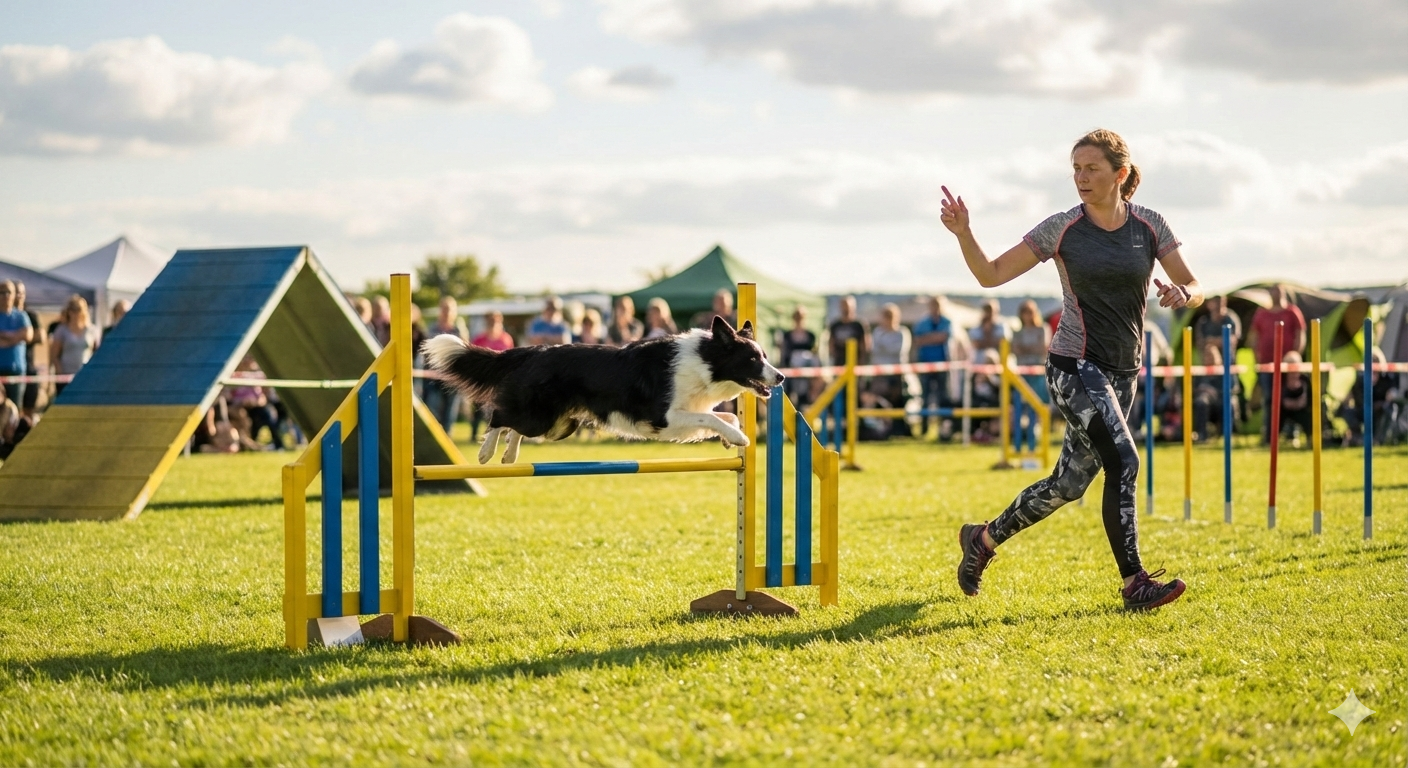
    A dog jumping over an obstacle as it's owner leads it through the agility course

    Getting ready for training

    If you have been seriously considering signing your dog up for agility training, then you should take the proper steps to prepare your k9 companion for what lies in store for them. Now what is dog agility you might ask? It’s a great sport that involves you and your dog, using teamwork towards a common goal. Not only is it quite entertaining to watch, it can be very addictive for the owner and dog alike, once both of you get the hang of it.

    Now lets go through how it all works. The Handler directs their dog through an obstacle course of a-frames, weave poles, dog walks, tunnels, jumps, teeter totters, and chutes, in a race for accuracy and over all time.

    You can’t however touch your dog or any of the obstacles that’s against the rules. There is also no use of a leash. You can only use visual and audible cues to direct your dog through the course.

    Next you should factor in some tips about how to prepare your dog. This will be physical, Show your dog what it will be engaging in throughout any of the serious training. Also, what it will experience later on if you wanted to go into competitions. Ultimately if your paying for training, your instructor will always know when your dog is ready for competition. So, don’t rush towards that too quickly. Ensure your dog is fully trained and is in peak condition.

    Getting Ready for Competition

    Obviously your dog needs to be fit, considerably attentive and don’t forget excited to give this their all. It’s also important that they’re jumping confidently to there full height. Unless of course you aren’t aiming for a specific size class for your dog to eventually compete in. Which means over sized obstacles, so the dogs can fit through and between them without knocking them down. Unless you are sure the competitions won’t included weaves. Then just be sure the dog is focused on your commands and excited to be there.

    Your dog will also be required to complete full sequences of obstacles pretty fluently. So, remember to be fair to your dog these competitions are a measure of there competence in the sport. Don’t force them to compete prematurely, make sure they’re well prepared for what’s expected of them.

    In Closing, it’s important to remember to have fun while doing this. If your not having fun, your dog will sense your tension. This can cause your dog to start acting up, and not following your directions correctly. Always remain calm, content, and over all remember to have fun.

  • Recognizing Dominant Alpha Dog Behaviors

    Besides the obvious guarding, growling and biting many dogs display a variety of dominant behaviors that commonly go unrecognized by their owners. Very rarely will a dog display his highest level of dominance overnight. There are usually signs leading up to it over course of a few years. Dominant alpha dogs won’t always growl and bite. If you the owner are giving the dog what he wants, there sometimes is no reason for the dog to growl or bite unless they feel challenged.

    Dogs generally understand that they exist in a human world. After all, who feeds them and opens the door for them to go outside to potty? When humans perform these tasks on demand from the dog though, why wouldn’t the dog think they’re the leader? It is easy for dogs to get the impression they are alpha in their pack. There are many alpha dog behaviors that are not acceptable in human society, such as biting, which is a communication tactic that a dog may use. It is very important for humans to remain the leaders over their dogs.

    Just looking at a dog and the way he presents himself can be a sign for what frame of mind the dog is in. A more dominant dog will walk high and proud, puffing themselves out as much as they can. He carries himself with what looks like dignity to the untrained eye.

    Submissive dogs on the other hand carry themselves in very much the opposite way. They hold their heads low with shoulders and tail down, in a sense making them smaller. Generally, it will appear that a submissive dog is a sad dog. Not so, the posture of these submissive dogs is telling all around them that they do not wish to challenge any other dog or that they come in peace. Dogs are animals that will fight amongst each other naturally. This means their natural defense is to fight when they feel threatened. That is why they make it as obvious as possible when they do not wish to have an altercation of any kind.

    Since dominant dogs look so proud and submissive dogs look sad since they hold their heads low, it’s no wonder so many people have dominant dogs. When their dog acts submissive they mistake that for a sad dog. When their dog acts dominant they mistake it for a happy proud dog.

  • Submissive Urination in a Puppy

    Submissive wetting or urination is unfortunately a normal way for pups to demonstrate submissive behavior. Even a puppy that is for the most part housetrained may leave dribbles and puddles of urine on the floor by your feet when they greet you.

    When it comes to puppies, submissive urination is the ultimate way of showing their respect for you and the desire for a higher rank in the pack. It occurs frequently with young pups that have not yet learned and perfected very important social skills. Submissive urination in adult puppies is more than likely a sign of insecurity. Often pups that are not socialized or unfortunately in some cases abused pups will submissively urinate. Other puppies that engage in submissive urination may simply have not been shown or demonstrated that there are more acceptable ways to show respect. Such as raising a paw for a hand shake or giving a kiss with a simple lick.

    Submissive urination may be present in overly sensitive or mistreated puppies because they feel the need to constantly apologize. The root cause of this state of mind is often caused by excessive or delayed punishment. This of course will frighten and confuse the puppy without having taught him how to make amends in a proper manner. The puppy resorts to the only way he knows how to show respect and fear, by submissive urination. When your puppy submissively urinates, it is best to just ignore him. If you try to reassure him, he will think you are praising him for urinating and will in turn urinate more frequently. If you raise your voice and yell at him, he will feel an even greater need to apologize by urinating. Both reassurance and scolding will only make submissive urination a much bigger issue.

    Treatment of submissive urination must be directed towards building your puppy’s confidence and showing him better ways of demonstrating and showing respect. The quickest way to accomplish this is by teaching your puppy a few basic obedience exercises. A puppy that can earn praise by obeying a simple routine of “Come here, sit, shake hands,” will soon develop a crucial level of self esteem and confidence. Therefore a more confident puppy with high self esteem who can say, “Hello” by simply sitting and shaking hands does not feel the need or urge to urinate at his owner’s feet.

  • Diagnosis for Separation Anxiety in Dogs

    First, understand that your dog is not trying to get even with you for leaving him home alone. The destructive behaviors, going potty on the floor and neurotic behavior that accompany dog separation anxiety are linked to a panic response. Luckily, for you the owner, the panic response is a behavior that is successfully modified with corrective, positive reinforcement to help calm nerves and promote your dog’s confidence and wellbeing.

    No one fully understands why there’s some dog that suffer anxieties more than others when some dogs don’t at all. However, it is known that dog separation anxiety sometimes occurs when a significant change in routine, structure or surroundings such as the absence of an important companion. This may also occur when moving into a new home, a new pet or person in the family, or perhaps a change in the normal feeding schedule.

    Before we get into the process of what to do about dog separation anxiety, let’s spend a moment going over what NOT to do. First and foremost, don’t punish your dog. Punishment of any form is NOT an effective way to treat dog separation anxiety as well as any unwanted behaviors. A response such as this, on the part of the owner (you) only serves to reinforce the behavior you’re trying to do away with.

    Providing another pet as a potential companion for your dog won’t exactly help either. Dog separation anxiety stems from your dog being separated from you and not so much from being alone. Being unable to play with another animal isn’t the same as just being plain old bored. There is a major difference between boredom and loneliness.

    Incarcerating a dog with separation anxiety in a crate is also not the answer, nor a solution. A dog’s nature is to be free. A nervous dog locked in a crate is now left with a heightened panic response but now with a build up of paranoia and desperation on top of it. The added risk of your dog injuring himself in an attempt to escape from the crate is also heightened.

    Obedience training alone will not address this psychological problem. Although, there is no question that obedience training is a satisfying and worthwhile experience for the both of you to enjoy. Dog separation anxiety is an uncorrected panic response and is unrelated to obedience as well as disobedience.