Category: Dog Training Classes

Posts that include all of our training classes. From private lessons to Canine Good Citizen, all of our training classes fall into this category.

  • How to Make Sure Your Dog Won’t Eat Your Dinner

    The majority of dog owners have experienced their animal begging at the dinner table. No matter how much you love your puppy, this is a behavior, which you just shouldn’t tolerate. Especially if you have guests over, then your dog should be calm and leave everyone be during their meal.

    There’s a lot said about being the pack leader. This term describes making sure your dog is aware that you are the one who is in charge of your household. Many dogs male and female will attempt to show their dominance by taking your food right off your plate. This is a usual problem when you have guests over, they turn there back to talk to someone sitting next to them, and instantly they loose there main course faster than you can say “what just happened”.

    The biggest issue is occasionally feeding your dog from the dinner table is a bad habit to start. Owners often justify this behavior saying, “it’s just once in a while”, or even “I rarely do this but”. These are all bad excuses because it leads to a negative learned behavior for your dog. As the owner you must lead by example if you expect your dog to behave all the time, if you expect consistency out of your animal.

    Now if your dog is well trained in general and listens to commands such as lie down, stay, heel, etc., then you do have the option of just making sure your animal follows your commands, its best to ask them to lie down above all else, this helps reinforce dominance in your relationship, it reminds the dog you’re the pack leader. Then, whatever you do it will follow suit and listen as closely as possible. If you do however notice your dog start to get up from the laying down position, curb that immediately and remind them to stay lying down while your feeding them.

    Ultimately, you have to remain diligent with your dog and cannot be inconsistent. Your dog learns and remembers things via repetition and consistency. Practice this at every family meal, do it often enough prior to having any company over. Once you establish your guidelines with your dog when you are eating at the dinner table, everyone will be happier for it. Dogs need rules boundaries and limitations to feel complete. This is how it is in the wild, or if you have a pack of dogs, the dominant animal is going to let the rest of the pack know when something they are doing is disruptive, or making them feel uncomfortable, so it might feel like your being cruel sometimes to your dog, but they absolutely need this to be happy and healthy.
  • Teach your puppy to alert you when it needs to go outside

    Living with your owner as a puppy can be quite difficult in the early learning stages of their development. The first of many live lessons for your puppy is not to relieve itself inside the house. Then of course your puppy lacks the ability to explain to you in plain english that it needs to go out to do its business. Also, unless your puppy can walk on its hind legs and use both paws to open the door, you’re going to have to train them to let you know when it’s time to head outside.

    Not all pet owners know how to see the sometimes subtle signs that it’s time to go out for a walk and let your dog do its business. Many puppies develop social skills quite early, thus being able to get your attention that it needs to go outside. Some however, aren’t as adept at telling people when they need to go out. Even if your dog falls into this category there’s no need to panic. There are some very easy steps you can take to train your puppy to let you know when the time is right to head outside and let them do their business.

    The first question is what if my puppy already does in fact ask to go out and I absolutely don’t understand the signs? Dogs have their own way of communicating with one another. This language unfortunately we do not understand whatsoever, but your dog doesn’t realize it’s not coming in loud and clear when it expresses itself.
    Now here’s a list of common clues that it might be time for a trip outside for the puppy. Pacing back and forth, circling around excessively, and whining consistently with no obviously reason what’s bothering them. Also, sniffing around when you have no other new animals in the house for which it might feel the need to do that otherwise. If you see the dog going behind furniture, or to a part of the house where you cannot keep an eye on them. Alternatively, standing by or scratching at the door in any way.

    The best way however to train your dog to let you know when it wants to go outside is to hang some type of reasonably loud bell on the door knob where it has access to reaching it if nothing else. This way you can have your dog ring the bell to associate it with going outside. This way if you’re in another room even then you can hear the dog needs to head outside to relieve itself.

  • Games To Play with Your Dog that are Both Fun and Promote Obedience

    Getting Ready for Training:

    There are loads of obedience games you can play with your canine companion, and many of them incorporate visual and audible cues. Here are a couple great classics that are tried and proven to be useful. This collection of great games offers a wonderful chance to train at the same time your dog is doing its favorite activity, having fun with their owners and learning without realizing it.

    Hide and seek is a fun game from our childhood, but what you might not realize is your dog will absolutely love it. Not to mention the dog needs to use its senses to find you. Your animal has a natural instinct to hunt and search so finding you is a very rewarding experience for it as well. To ensure your dog gets a challenge in this activity its best to play in a large yard or fenced in area so it wont run off and loose focus.

    You will first need to ask your dog to stay, and then hide in a nearby place to make it easy at first. Say whatever word you use to get your dog to come over to you after telling it to stay. Your dog should have no problem finding you since you didn’t hide in a difficult place. Now here is where treats can come in handy if your dog has a favorite one I would use it to reward them. You should make sure you increase the difficulty of the game so your dog gets the most out of it.

    Now, this game teaches your dog tremendous self-control and patience. Most of you should be familiar with the old street corner game three-card Monte? Well this is oddly reminiscent of that game. To play it, you need your dog’s favorite treats and three cups. As far as indoor games go, this one offers great entertainment. Be careful however, that your dog doesn’t try and chew on the plastic cups.

    I do recommend before you play this game with your dog you set it up ahead of time and have the cups on the table. Then, show your dog the treat so it’s clear what they’re playing to get. If you want to be cute you can tell them not to look while you place it under the cup. It likely doesn’t matter if they see where you put it though. Lastly, move the cups around and try and confuse your dog. Then watch as they use their senses to locate the treat under the correct. As always make sure you let them know they did a great job when they find it, that positive reinforcement is what they thrive on, use it to your advantage.

    There are my couple suggestions for games to play. Always play in a safe area, not out in the street where cars can come flying past. Always keep a bottle of water handy, if your not home playing in the yard, and you’re in a park for example they will thank you for it.

  • Dog Agility Training & Competition

    Dog Agility Training & Competition

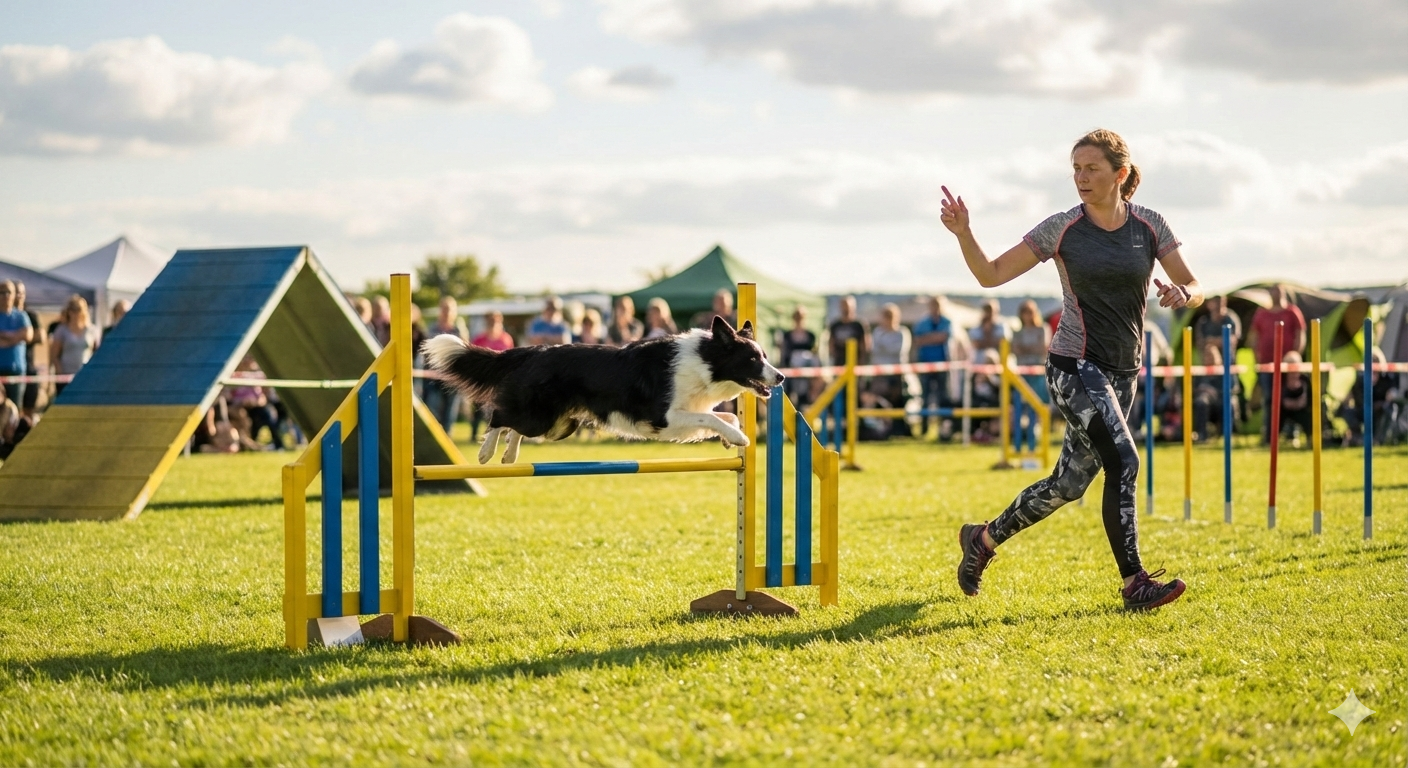
    A dog jumping over an obstacle as it's owner leads it through the agility course

    Getting ready for training

    If you have been seriously considering signing your dog up for agility training, then you should take the proper steps to prepare your k9 companion for what lies in store for them. Now what is dog agility you might ask? It’s a great sport that involves you and your dog, using teamwork towards a common goal. Not only is it quite entertaining to watch, it can be very addictive for the owner and dog alike, once both of you get the hang of it.

    Now lets go through how it all works. The Handler directs their dog through an obstacle course of a-frames, weave poles, dog walks, tunnels, jumps, teeter totters, and chutes, in a race for accuracy and over all time.

    You can’t however touch your dog or any of the obstacles that’s against the rules. There is also no use of a leash. You can only use visual and audible cues to direct your dog through the course.

    Next you should factor in some tips about how to prepare your dog. This will be physical, Show your dog what it will be engaging in throughout any of the serious training. Also, what it will experience later on if you wanted to go into competitions. Ultimately if your paying for training, your instructor will always know when your dog is ready for competition. So, don’t rush towards that too quickly. Ensure your dog is fully trained and is in peak condition.

    Getting Ready for Competition

    Obviously your dog needs to be fit, considerably attentive and don’t forget excited to give this their all. It’s also important that they’re jumping confidently to there full height. Unless of course you aren’t aiming for a specific size class for your dog to eventually compete in. Which means over sized obstacles, so the dogs can fit through and between them without knocking them down. Unless you are sure the competitions won’t included weaves. Then just be sure the dog is focused on your commands and excited to be there.

    Your dog will also be required to complete full sequences of obstacles pretty fluently. So, remember to be fair to your dog these competitions are a measure of there competence in the sport. Don’t force them to compete prematurely, make sure they’re well prepared for what’s expected of them.

    In Closing, it’s important to remember to have fun while doing this. If your not having fun, your dog will sense your tension. This can cause your dog to start acting up, and not following your directions correctly. Always remain calm, content, and over all remember to have fun.

  • Recognizing Dominant Alpha Dog Behaviors

    Besides the obvious guarding, growling and biting many dogs display a variety of dominant behaviors that commonly go unrecognized by their owners. Very rarely will a dog display his highest level of dominance overnight. There are usually signs leading up to it over course of a few years. Dominant alpha dogs won’t always growl and bite. If you the owner are giving the dog what he wants, there sometimes is no reason for the dog to growl or bite unless they feel challenged.

    Dogs generally understand that they exist in a human world. After all, who feeds them and opens the door for them to go outside to potty? When humans perform these tasks on demand from the dog though, why wouldn’t the dog think they’re the leader? It is easy for dogs to get the impression they are alpha in their pack. There are many alpha dog behaviors that are not acceptable in human society, such as biting, which is a communication tactic that a dog may use. It is very important for humans to remain the leaders over their dogs.

    Just looking at a dog and the way he presents himself can be a sign for what frame of mind the dog is in. A more dominant dog will walk high and proud, puffing themselves out as much as they can. He carries himself with what looks like dignity to the untrained eye.

    Submissive dogs on the other hand carry themselves in very much the opposite way. They hold their heads low with shoulders and tail down, in a sense making them smaller. Generally, it will appear that a submissive dog is a sad dog. Not so, the posture of these submissive dogs is telling all around them that they do not wish to challenge any other dog or that they come in peace. Dogs are animals that will fight amongst each other naturally. This means their natural defense is to fight when they feel threatened. That is why they make it as obvious as possible when they do not wish to have an altercation of any kind.

    Since dominant dogs look so proud and submissive dogs look sad since they hold their heads low, it’s no wonder so many people have dominant dogs. When their dog acts submissive they mistake that for a sad dog. When their dog acts dominant they mistake it for a happy proud dog.

  • Dog Training with Positive Reinforcement

    Positive reinforcement dog training is a friendly method of teaching your dog to perform behaviors using dog food, treats and other positive actions in the form of a reward. Rewarding appropriate dog behavior makes that behavior more likely to become a future re-occurrence. This is one of the most powerful tools you can use to reshape or change your dog’s actions. Using positive reinforcement dog training teaches your dog what behaviors you do and don’t desire in a humane manner. This training method will also help to create healthier and much stronger bond between you and your dog.

    Training based on physical punishment involves some level of discomfort or even pain and is most definitely not recommended. This also may cause your dog to bite in order to defend himself. Punishment may also be associated with other stimuli, including people, present at the time and occurrence of the punishment. For example, a dog that is punished for getting too close to a small child may become fearful or even defensive around that child.

    When getting started, timing is key with positive reinforcement dog training. Your dog must be rewarded immediately for responding appropriately to your command. Every member of your family should use the same command system and of course, never reinforce the wrong behavior. For example, if you command your dog to sit, he should be given a treat the moment his bottom touches the floor. If you wait to long before giving him the treat after he stands up again, the moment will be lost. He will then think he is getting rewarded for standing, not sitting.

    Most dogs will gladly work for positive rewards such as a tasty dog treat, play time and toys. We suggest that you choose a treat that is relatively small, soft, and easily broken apart. Treats should be highly valued by your dog as well as easy consumption. It is difficult to train a dog when he spends valuable time chewing and swallowing his reward. You want your dog to quickly eat the treat and look to you for more. Try to experiment with several different types of treats and find out which ones will work best. There are some dogs out there that are not motivated by food. If this is the case, try training using praise or build motivation through the company of other dogs.

  • Tips for Avoiding Common Dog Training Mistakes

    One of the easiest mistakes that can be made when training your dog is not paying attention. If your attention is elsewhere for even a short while, suddenly you may find that your puppy is off doing unspeakable things to you’re your furniture in the living room. You can not properly correct him unless you catch him red handed. All puppies have an incredibly short attention span. So, even just five minutes ago no longer exists. They will not make the mental connection when you are yelling about something they did minutes ago. When you can not pay attention to your puppy, he should then be in a safe place, like his crate, or perhaps by your side at all times.

    Your dog will not know he has done something right when you fail to reward him for his good behavior. It is also crucial to communicate your praise to him in a language he can understand. The rewards do not necessarily always have to be something such as a treat. No matter what reward you may go with, your dog will need to connect the reward to his action in order for him to get the correct message. Instant praise is the best reward you could ever give. It’s instant gratification for your dog, and gives you a few seconds to provide the tasty treat reward if you have one. Those few seconds will fill in the gap between “Yay, I did things right!” and “Wow, what did I ever do to deserve an outcome like this?” This is extremely important during the earlier stages of the training process. This is especially true for when you are trying to get your dog to correlate his actions to your commands.

    Another common mistake is to put things off for much too long. You may look at your little puppy, and think “it’s not absolutely necessary for him to need to learn anything just yet”. But what about walking on a leash, stay, coming when you call? This is especially true when a puppy’s natural instinct is to generally be by your side anyway, without incentive. But if you let things go for too long, your pup will not want to cooperate any longer. Training while your pup is still relatively young is the most solid way to get the basics into your dog’s head for good.

  • Tips for Avoiding Common Dog Training Mistakes (Part 2)

    Allowing your dog to beg is a common training mistake. A dog that has never received food from you when you are eating at the table will no longer continue to beg. He might try it once or twice early on in your relationship. With consistent “no’s” and “go lay down” commands will quickly discourage him from further attempts. However, if you give in, even just once and give him a piece of you are eating, he’ll know that begging worked. Therefore, with common sense, your dog will gain the idea that what works once, will eventually work again.

    Inconsistency may seem like such a small thing, but it may leave you destined to fail. Constantly measured attention is absolutely essential when training your dog. Deviate away from any routine you may have built up will almost always undo all that hard work you have done previous.

    Calling your dog for punishment will not get you anywhere. Let us focus on why it’s not good to call your dog to your side in order to get mad at him. Nobody wants to go over to someone when they know they are going to get in trouble. This is even true with adults, children, and especially a dog. People know you’re not likely to forget your anger, but a dog is hopeful, and will try everything to avoid you if he knows you’re angry. In your dogs mind, every time you call him to you in order to do something unpleasant, you are punishing him for returning to you. So, if your dog is in trouble, or you have to do something he won’t like, go and get him, instead of calling him.

    Rewarding the wrong behavior will happen to all of us at some point or another. This is one of the most common mistakes made when dog training. You may not even think of it as necessarily rewarding your dog. You may see it as a method of comforting him when he’s frightened, or perhaps letting him in when he barks, or even giving him a stern talking to when ever he misbehaves. Attention of any kind when a dog misbehaves is a signal to the dog. The dog may interpret this attention as this works, it’s not quite what I was looking for, but it’s still some kind of attention.” Even negative attention may seem better than none at all.

  • Teach your dog to Stand, Rollover, Crawl, Lay Down and Focus

    Teach your dog to Stand:
    Starting from the sitting position, hold a treat right in front of the nose of your dog, then say stand. Then move the treat above him so that he will have to stand in order to reach it. As soon as he stands say good boy! Then wait for him to sit back down to give him the treat. While he is standing you can move just a few steps while holding the treat. Praise him a lot if he follows you.

    Teach your dog to Rollover:
    Starting from the laying position, say roll over and then proceed to roll your dog over gently. Do this by grabbing his legs and then pull him, or simply push him from one side so that he makes a complete roll. After he has completed the roll, make him sit, praise him and give him the treat.

    Teach your dog to Crawl:
    Starting from the laying position, say crawl while holding a treat in front of your dog’s nose and move it a few inches away from him. If he begins to stand up, just say no crawl, start from the beginning and have him lay back down again. Praise him a lot and give him the treat as soon as he crawls, even if it’s only a few inches.

    Teach your dog to Lay Down:
    There are various ways to do this. Begin with having your dog sit then say, lay. Then present the treat in front of his mouth, going all the way down to the ground with your hand. The dog will naturally follow your hand and will end up lying down. Give him the treat only when he stretches his forearms in front of him and then praise.

    Teach your dog to Focus:
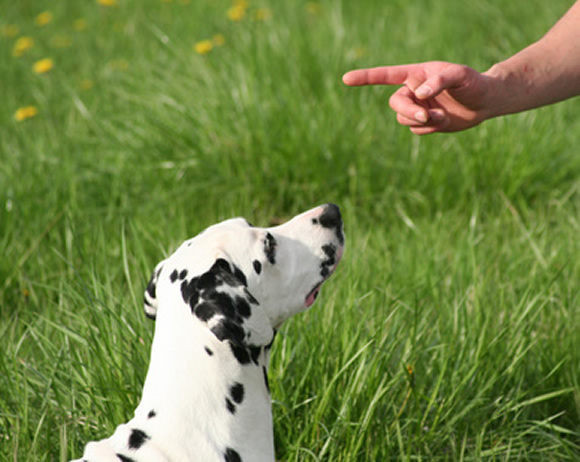
    Begin by sitting or kneeling, in front of your dog. Hide your hands so he won’t be distracted looking at them and then say your dog’s name followed by saying focus. As soon as he looks at you in the eyes start praising him. Always keep eye contact and after a few seconds give him a treat. If he looks elsewhere, just call him again and begin to start over. Try to extend the time while he’s focused on you.

  • Helpful Drills for Dog Agility Training

    Learning to handle your dog properly is a major role in dog agility training. This means communicating what you want your dog to do. Once your dog has the basics down, most errors that occur are due to the handler’s abilities. As a handler, you need to learn how to communicate what you want your dog to do or perform. One way to do that is to practice exercises that teach you how to better handle your dog.

    Every dog has his own way of running the course. Some dogs need little guidance while others need the handler by their side at all times. By watching your dog and how much he relies on you to complete the course, you’ll be able to determine how much handling your dog needs.

    To properly access the situation, try setting up two basic hurdles side by side and direct your dog to the right hurdle. Study your dog’s reaction as you send him to the hurdle. Does your dog leave your side or does your dog expect you to run or walk with him the entire way?

    Then try making the course into an “S” shape where you’ll be starting on the inside line and crossing over in the middle so that you will stay on the inside line. Try first with a fast obstacle such as a hurdle, tunnel or series of hurdles in the center of the course. Send your dog over the hurdles and cross behind your dog so that you switch effortlessly.

    Next, put a slow obstacle in the center of the course such as weave poles, a table or contact obstacle. Then continue with your dog until he gets to the downward edge of the contact obstacle. This will most likely be the second to last pole of the weaves. Cross in front of the dog and then continue him over to the next obstacle of the course.

    Try handling your dog first using the inside line and then moving onto the outside line to get a proper feel for handling either side of the course. If you have a very fast paced dog, then you will have to slow him down while you take the outer line. Likewise, if you have a slower paced dog, then you may have to slow down on the inside line, then work on speeding your dogs performance.